|
Getting your Trinity Audio player ready...
|

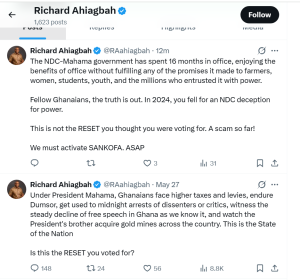
The Director of Communications of the New Patriotic Party (NPP), Mr. Richard Ahiagbah, has claimed that Ghanaians are experiencing severe hardships under the Mahama administration. In a separate post, he described the arrest of NPP activists over their social media comments as an example of tyrannical and oppressive governance. Ahiagbah’s remarks come in the wake of the arrest of TikToker Akosua Serwah Minat, who was detained over a threat against President John Dramani Mahama.
Writing on his X page, he stated: “Mr. President, you inherited a democracy and have turned it into a tyranny, a cruel, oppressive, and unfair abuse of government power. It is shameful. Very shameful. Extremely shameful.”
Meanwhile, former Deputy Minister of Foreign Affairs, Emmanuel Bombande, argued that hate speech cannot be equated with free speech. Speaking on Key Points on TV3 on Saturday, May 23, he said: “If you engage in hate speech and claim that is free speech, then you are being disingenuous.” He made the comments in reaction to the arrest of NPP Bono Region Chair Kwame Baffoe (Abronye DC).
Abronye was recently granted bail by the High Court in Accra after being remanded in custody on charges of false publication. His counsel, former Information Minister Kojo Oppong Nkrumah, led by former Attorney-General Godfred Yeboah Dame, filed a motion for bail pending trial.
“We move in terms of the motion paper and pray that the applicant be granted bail pending trial,” counsel for the applicant submitted. The prosecution, represented by Deputy Attorney-General Dr. Justice Srem-Sai, indicated that the Republic did not oppose the application.
The court granted Abronye bail in the sum of GH¢100,000 with two sureties. As part of the bail conditions, he must report to the Police CID every fortnight, surrender all travel documents, and refrain from travelling outside the jurisdiction without the express permission of the Registrar.
Abronye’s initial remand drew criticism from sections of the NPP and some legal analysts, who argued that it infringed on his constitutional rights. However, the presiding judge explained that the decision was based on concerns over the likelihood of the accused committing another offence if granted immediate bail.
Story by Efua Nessa