|
Getting your Trinity Audio player ready...
|
By Efua Nessa
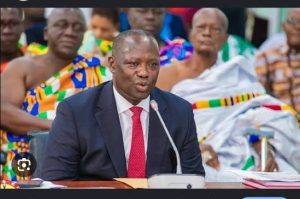
Minister for Lands and Natural Resources, Emmanuel Armah-Kofi Buah, has reaffirmed Ghana’s commitment to global efforts aimed at protecting ecosystems and promoting sustainable forest governance. Speaking at the 21st Session of the United Nations Forum on Forests in New York City, he outlined policy-driven interventions designed to combat deforestation and environmental degradation.
The Minister stated that Ghana’s environmental agenda prioritises restoration, sustainable land use, legal timber trade, and strengthened enforcement mechanisms, consistent with the UN Strategic Plan for Forests 2030 and the Sustainable Development Goals. He highlighted the government’s flagship “Tree for Life” restoration initiative, which mobilised citizens, schools, businesses, and local communities to plant over 30 million trees in the past year. A new phase of the programme will launch on June 2, coinciding with the rainy season, targeting an additional 30 million trees nationwide.
Ghana’s broader forest governance efforts include the Ghana Forest Plantation Strategy and the Ghana Cocoa REDD+ Programme, which integrates sustainable agroforestry into cocoa landscapes. Through REDD+ — developed under the UN Framework Convention on Climate Change — Ghana is reducing emissions from deforestation and forest degradation while enhancing carbon stocks and supporting forest-dependent communities.
“We have integrated native tree planting into cocoa landscapes to boost yields, strengthen farmer resilience, and deliver measurable carbon benefits,” the Minister noted. Ghana is a leading cocoa producer implementing climate-smart cocoa systems, and its Cocoa Forest REDD+ Programme became the first in the world to receive results-based payments from the Green Climate Fund for verified emission reductions from forest protection activities.
The Minister also highlighted intensified actions against illegal logging and mining, both of which threaten biodiversity, water bodies, and forest reserves. Ghana is exploring diversified forest financing mechanisms to support long-term environmental sustainability while ensuring economic resilience.
A major milestone in sustainable timber governance, he said, was Ghana’s issuance of its first FLEGT (Forest Law Enforcement, Governance and Trade) licence in August 2025. Ghana became the first African country and the second globally after Indonesia to export FLEGT-licensed timber to Europe, ensuring every shipment carries verifiable proof of legality and sustainability.
Mr. Armah-Kofi Buah concluded that Ghana’s environmental policies are fully aligned with multilateral frameworks promoting restoration, biodiversity conservation, climate resilience, and responsible natural resource management, demonstrating that restoration, protection, and innovative financing can advance sustainable development.