|
Getting your Trinity Audio player ready...
|
By Juliana Boahen
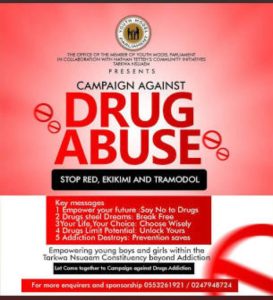
Drug abuse among young people is becoming a growing concern in Ghana, with its effects being felt in schools, families and communities across the country.
Drug abuse refers to the harmful or improper use of substances that can negatively affect a person’s physical and mental well-being. Young people may become involved because of curiosity, peer pressure, the desire to fit in, personal difficulties or influence from people around them.
Stories of young people being introduced to drugs by friends are frequently heard in communities. There are also concerns about students whose behaviour and academic performance may be affected after becoming involved in substance abuse.
Some young people have shared experiences of friends being pressured to experiment with substances because they do not want to feel left out. This highlights the influence that friends and social groups can have on the decisions of young people.
Drug abuse can affect a person’s behaviour, relationships and education. It can also create difficulties for families and communities. When young people lose interest in school or other positive activities, their future opportunities may be affected.
The problem can also have serious health and social consequences. Harmful substance use can affect decision-making and may contribute to accidents, violence, poor academic performance and other difficulties. Its effects can therefore extend beyond individuals to their families and communities.
Schools have an important role to play in addressing the problem. They can provide students with appropriate education about substance abuse and its consequences. Parents and guardians can also communicate openly with young people and provide guidance when they face difficulties.
Young people can also be encouraged to participate in positive activities such as sports, creative programmes, skills training and community activities. Choosing friends who encourage positive behaviour can help young people resist harmful pressure.
The government and relevant institutions can strengthen prevention programmes and ensure that people affected by substance abuse have access to appropriate professional support. Communities can also work together to protect young people from harmful influences.
Drug abuse is therefore more than an individual or family problem. It is a national concern that requires collective action. Through education, parental guidance, positive peer influence, community support and appropriate professional help, Ghana can take meaningful steps to protect its young people and build a healthier future.