|
Getting your Trinity Audio player ready...
|
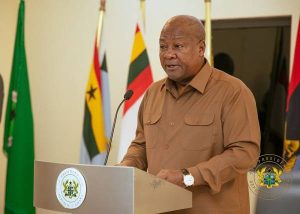
President John Dramani Mahama has linked the recent severe flooding in Accra to a combination of intense rainfall, climate change, weak drainage systems, and human activities that continue to block natural waterways.
The President made the remarks on June 29 after an aerial tour of flood-hit areas in the capital. He described the incident as one of the most severe flooding events in recent years, noting that the rainfall intensity was unusually high.
According to him, about 140 millimetres of rain fell in Accra in a single day—far above the average of 56 millimetres recorded during heavy rainfall days last year. He explained that such extreme weather conditions overwhelmed the city’s drainage infrastructure.
President Mahama further revealed that data from the Ghana Meteorological Agency indicates a steady rise in rainfall intensity over recent years. He noted that June rainfall levels increased from 85 millimetres in 2024, to 172 millimetres in 2025, and 333 millimetres in 2026 over comparable periods, highlighting a worsening trend.
He also stressed that Accra’s geographical location—sandwiched between the Akwapim mountain range and the Atlantic Ocean—naturally makes it prone to flooding, as the city depends heavily on waterways to channel excess rainwater into the sea.
However, he said many of these natural drainage paths have been blocked due to rapid urbanisation, uncontrolled construction, and population growth.
The President also pointed to human actions such as indiscriminate waste disposal into drains and the conversion of wetlands into illegal dumping sites and residential areas as major contributing factors.
He expressed concern over reports that some wetlands are being filled with waste and later sold for development, warning that such practices worsen flood risks for nearby communities.
President Mahama emphasized the need for both engineering solutions and strict enforcement of environmental and planning regulations, including the removal of structures that obstruct drainage channels.
While acknowledging that demolition exercises often face public resistance, he argued that failure to enforce the law leads to greater damage and suffering during floods.
He called for collective responsibility, stressing that the actions of a few individuals can put entire communities at risk.
“The actions of a few people can have serious consequences for the entire city,” he stated, urging sustained cooperation to address Accra’s recurring flooding challenges.
Story by Efua Nessa