|
Getting your Trinity Audio player ready...
|
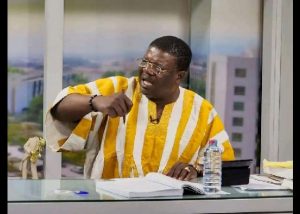
Rockson-Nelson Dafeamekpor, the Majority Chief Whip and Member of Parliament for South Dayi, has called for a constitutional amendment to safeguard the independence of the Office of the Special Prosecutor (OSP). He argued that only by embedding the office in the 1992 Constitution can it be fully insulated from political interference.
Dafeamekpor pointed out that the current legal framework limits the OSP’s autonomy because prosecutorial powers are constitutionally granted to the Attorney General under Article 88. This arrangement makes it difficult for any legislation to give the OSP full independence.
In an interview with Joy News, Dafeamekpor emphasized that a constitutional solution would be the most effective way to address the issue. He proposed that the OSP be constitutionally recognized, much like the Attorney General’s office under Article 88, which would ensure no rivalry between the two institutions.
His remarks come amid ongoing national debates surrounding the independence and effectiveness of the OSP, which was established in 2017 under the Office of the Special Prosecutor Act (Act 959) to handle corruption-related investigations and prosecutions.
Dafeamekpor noted that under the current constitutional framework, Parliament cannot pass laws that contradict Article 88, which grants prosecutorial authority exclusively to the Attorney General. He warned that any law in conflict with this provision could be invalidated by the Supreme Court.
“To make the OSP truly independent, the solution is clear: it must be enshrined in the Constitution,” he stated.
The proposal for a constitutional amendment would require a complex reform process, including political consensus and possibly a national referendum. Dafeamekpor’s call marks a significant step in the evolving debate about Ghana’s anti-corruption institutions, especially the OSP, which has faced challenges regarding its powers and operational independence.
As the conversation continues, Dafeamekpor’s suggestion signals a potential shift towards structural reform rather than mere legislative adjustments, sparking broader discussions on how Ghana can more effectively tackle corruption.
Story by Efua Nessa
Source: Loco tv