|
Getting your Trinity Audio player ready...
|
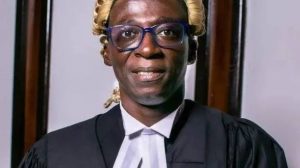
Legal practitioner and public commentator, Austin Kwabena Brako-Powers, has disputed a recent court ruling that suggested the Office of the Special Prosecutor (OSP) lacked proper authorisation from the Attorney-General to initiate prosecution in a high-profile case.
Brako-Powers argues that the court’s finding, which questioned the Special Prosecutor’s authority, is not supported by a proper interpretation of the law.
He contends that the Special Prosecutor already has the necessary legal backing to prosecute cases independently. In a discussion on TV3’s Big Issues on Friday, April 17, 2026, Brako-Powers pointed out that the Memorandum accompanying the Office of the Special Prosecutor Bill, 2017, clearly shows that the Attorney-General granted the necessary authorisation for the Special Prosecutor to carry out prosecutions.
Brako-Powers explained that the legislative intent behind the establishment of the OSP was to create a specialised, independent anti-corruption body with prosecutorial powers, distinct from other state investigative agencies. He likened the OSP to other institutions like the Economic and Organised Crime Office (EOCO), emphasising that the OSP law is unique and should be understood within its specific statutory context.
Referring to Section 56 of the Criminal and Other Offences (Procedure) Act, 1960 (Act 30), Brako-Powers highlighted that the Attorney-General may authorise prosecutions via an Executive Instrument. However, he clarified that the word “may” in legal terms is permissive, not mandatory, and allows the Attorney-General discretion to authorise prosecutions through alternative means, such as those provided by the statute that established the OSP.
“I am confident that the Special Prosecutor has due authorisation from the Attorney-General,” he affirmed, dismissing claims that the OSP acted without proper legal mandate.
While Brako-Powers disagreed with the court’s conclusion, he acknowledged that the outcome of the case ultimately depended on the quality of evidence and legal arguments presented in court. He was critical of the OSP’s legal team, stating that their performance was lacking in diligence. In particular, he noted that key documents, such as the memorandum that accompanied the OSP Bill, were not presented to the court.
Had these materials been provided, Brako-Powers believes the court might have reached a different conclusion. However, he maintained that the judge acted within the law based on the evidence at hand.
In closing, Brako-Powers emphasised that the case serves as a reminder that success in court hinges not only on a strong legal position but also on presenting the right evidence at the right time.
Story by Efua Nessa
Source: Loco tv