|
Getting your Trinity Audio player ready...
|
The Road to Progress: The Uncomfortable Reality of the Kasoa–Winneba Construction
Story by Blessing Mensah
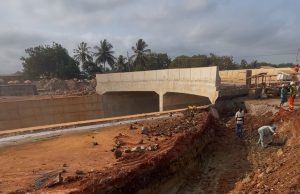
Development is often celebrated for what it promises to deliver: better roads, easier movement, economic opportunities and improved living conditions. But development does not always arrive without inconvenience. Sometimes, before communities enjoy the benefits of a project, they have to endure the disruption that comes with its construction.
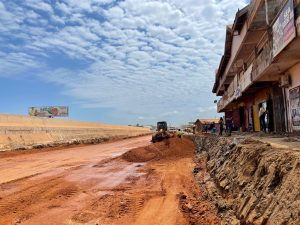
This is the reality for many residents and road users along the Kasoa–Winneba stretch, where construction is underway to improve the road and, ultimately, make movement easier and help address congestion.
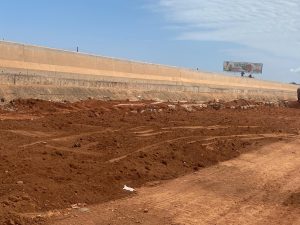
The project is undoubtedly important. A better road can mean smoother transportation, easier movement of goods and people, and potentially less congestion when completed. But for those who use the road now, particularly residents of Winneba, the journey towards that promised improvement has become increasingly uncomfortable.
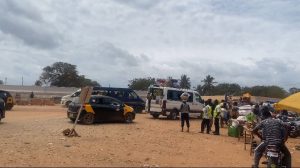
As a student who regularly travels from Winneba to Accra, I have experienced this firsthand.
What should ordinarily be a straightforward journey can become exhausting because of the dust, traffic and uneven sections of the road. With construction still ongoing, parts of the existing road have been affected to make way for the new development. The result, at least for now, is a road that can feel more difficult to navigate than it was before the current works.
The traffic is one of the most frustrating aspects.
Instead of immediately experiencing the smoother movement that the completed project is expected to provide, commuters currently have to contend with additional congestion around construction areas. Travel times can stretch, turning what should be a manageable trip into a much longer journey.
And then there is the dust.
For someone travelling from Winneba to Accra for an important event, the experience can be particularly unpleasant. You may leave home properly dressed and prepared, only to arrive in Accra after travelling through dusty sections of the road with your clothes, shoes and belongings covered in dust.
It may seem like a minor inconvenience when viewed from a distance. But for the person experiencing it, especially someone travelling for an interview, meeting, ceremony or other important occasion, it is not minor.
The dust is also more than a matter of appearance or discomfort. Road and construction dust contributes to particulate matter in the air, and inhaling particulate matter can irritate and inflame the respiratory system. According to the World Health Organization, particles such as PM10 can penetrate deep into the lungs, while finer PM2.5 particles can enter the bloodstream and are associated with respiratory and cardiovascular health problems.
This makes the persistent dust around the construction areas a public health concern worth paying attention to, particularly for people who live, work or regularly travel along the route. The health burden may not always be immediately visible, but repeated exposure to particulate pollution can have consequences beyond simply arriving at a destination covered in dust.
The same construction that promises better mobility in the future is currently making mobility more difficult for some people.
Drivers also have their own concerns. The uneven and bumpy sections of the road can put additional pressure on vehicles. For commercial drivers whose livelihoods depend on keeping their vehicles on the road, increased wear and tear can translate into additional maintenance costs.
These higher maintenance costs can also affect passengers. When drivers spend more on repairs and maintenance because of the condition of the road, some may increase the fares they charge customers to compensate for those expenses. This means commuters can end up paying more than the usual bus fare, adding another financial burden to an already difficult journey.
But the impact does not stop with people travelling on the road.
At Winneba Junction, where construction is taking place, some traders have had to adjust their businesses around the project. Some have reportedly lost their spaces, while others have had to move to accommodate the construction.
One such trader is Maame Esi, who told me that she had to close her provisions shop because of the construction. She now sells nose masks around the traffic area at Winneba Market.
Her experience puts a human face on what can sometimes be reduced to discussions about roads, contractors and infrastructure.
For Maame Esi, the construction is not simply an infrastructure project happening somewhere around her. It has affected how she earns a living.
And this is why development projects should not only be judged by what they will look like when completed. We must also pay attention to the people who have to live and work through the construction process.
There is, of course, a difficult balance to strike. It would be unfair to argue that the construction should not happen simply because it is creating temporary difficulties. If the completed road delivers the improved movement and reduced congestion it is intended to provide, many of the current frustrations may eventually become worthwhile.
But the fact that the difficulties may be temporary does not mean they should be ignored.
People still have to travel. Drivers still have to maintain their vehicles. Traders still have to make a living. Students still have to attend classes and travel for important engagements. Residents still have to go about their daily lives.
Development should improve people’s lives, but the people should not become invisible during the process of achieving that development.
As the Kasoa–Winneba project continues, the hope is not only for a completed road, but for a construction process that takes the everyday experiences of affected communities into consideration.
For those of us in Winneba who use this road, the promise is simple: we want the smoother, safer and less congested journey that the project is expected to bring.
Until then, however, the journey to that better road remains one filled with dust, delays, bumps and difficult adjustments.
And perhaps that is the uncomfortable side of development we do not talk about enough: sometimes the road to progress is itself difficult to travel.