|
Getting your Trinity Audio player ready...
|
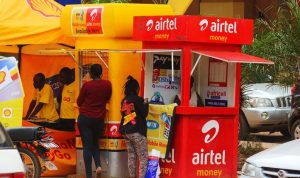
Ghana’s mobile money sector continues its remarkable growth, with transaction values reaching GH¢493.2 billion in April 2026, highlighting the central role digital finance now plays in everyday economic life. According to the Bank of Ghana’s May 2026 Summary of Economic and Financial Data, this represents a year-on-year increase of 35.1%, up from GH¢365.0 billion in April 2025. Transaction volumes also rose significantly, climbing from 778 million to 967 million over the same period, demonstrating that Ghanaians are not only transferring more money digitally but doing so more frequently.
The data underscore mobile money’s evolution from a simple peer-to-peer transfer service to a critical pillar of Ghana’s financial infrastructure. Today, it facilitates merchant payments, utility bills, informal trade, savings, and small business transactions at a scale few could have predicted a decade ago.
Registered mobile money accounts increased from 75.2 million in April 2025 to 83.0 million in April 2026, while active accounts — defined as those with at least one transaction in the past 90 days — grew from 24.2 million to 26.0 million. This trend suggests deeper engagement with the platform rather than mere account ownership.
The sector’s physical network also expanded, with registered agents rising from 911,000 to 992,000, and active agents increasing from 414,000 to 534,000. This growth in active agents is especially important for underserved communities, bringing financial services closer to areas with limited bank presence.
A notable change in consumer behaviour is the increased use of mobile wallets as storage for funds. The balance on float — the amount held in mobile wallets at any time — climbed from GH¢28.2 billion in April 2025 to GH¢36.7 billion in April 2026, indicating that mobile wallets are increasingly being used as short-term savings instruments.
Cross-network, or interoperable, transactions also expanded, with transaction values rising from GH¢4.0 billion to GH¢5.8 billion, and the number of transactions increasing from 23.1 million to 31.7 million. This shows a more connected digital payments ecosystem, allowing users to transact across networks seamlessly.
Mobile money’s dominance becomes even clearer when compared with other payment channels. Cheque transactions in April 2026 were valued at GH¢36.6 billion — less than 8% of mobile money’s total. Meanwhile, GhIPSS Instant Pay recorded GH¢79.0 billion, and internet banking reached GH¢42.0 billion, both far below mobile money’s GH¢493.2 billion. By both value and volume, mobile money remains Ghana’s leading payment method by a wide margin.
The April 2026 figures confirm a growing reality: mobile money is no longer just an alternative to formal banking in Ghana — for millions of Ghanaians, it is now the primary way they engage with the economy.
Story by Efua Nessa
Source :Loco tv