|
Getting your Trinity Audio player ready...
|
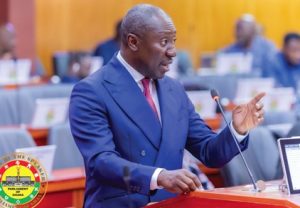
The Minority in Parliament has renewed its opposition to the reintroduction of public tribunals, urging President John Dramani Mahama not to assent to the bill establishing district and regional tribunals.
Minority Leader Alexander Afenyo-Markin argued that the move could create fear and undermine public confidence in the justice system, warning that tribunals established to target political opponents could eventually be used against those in power.
“President Mahama should not sign this bill. Send it back and listen to your own committee. A tribunal built to be used against your opponents today can be turned on you tomorrow,” he said.
Speaking during his closing address before Parliament adjourned sine die, Mr. Afenyo-Markin said the Minority rejected the bill because of Ghana’s past experiences with public tribunals, which he described as a period associated with human rights concerns and allegations of unfair trials.
He said although the legislation contains safeguards, including requirements for tribunal members to be persons of high moral character, the provision allowing members who may not be lawyers to serve on panels raises serious concerns.
According to him, allowing persons without legal training to handle complex cases involving fraud, taxation, and mining offences could pose risks to justice delivery.
“Power without training, wrapped in immunity, is not a small risk in a country with our history,” he stated.
The Minority Leader said his side’s decision to walk out during the passage of the bill was deliberate, insisting that it was necessary to clearly record their opposition to what they believe could threaten judicial independence.
He also raised concerns about the government’s position on proposed constitutional reforms, saying the Minority would carefully study the proposals before making its official position known.
Mr. Afenyo-Markin, however, commended the Supreme Court for upholding the constitutionality of the Office of the Special Prosecutor (OSP), describing the institution as an important safeguard for Ghana’s democracy.
He expressed concern, however, about the Attorney General’s power to enter a nolle prosequi in cases being handled by the OSP, warning that such authority must not be used to protect the powerful while disadvantaging ordinary citizens.
The Minority Leader concluded by accusing the government of poor performance, citing concerns over the economy, unfulfilled promises, disaster management, and what he described as a failure to deliver the promised “reset.”
He maintained that the Minority would continue to defend democracy, press freedom, accountability, and equal application of the law.
Story by Efua Nessa