|
Getting your Trinity Audio player ready...
|

MiDA CEO Highlights Neglected Agricultural Infrastructure in Ghana’s Middle Belt
Alex Mould, the Chief Executive Officer of the Millennium Development Authority (MiDA), has raised urgent concerns over the deteriorating state of agricultural infrastructure across Ghana’s Middle Belt, particularly following a recent week-long field assessment tour of the region’s key farming zones.
The assessment, which spanned the Ashanti, Bono, Ahafo, and Bono East regions, aimed to evaluate the region’s water resources, irrigation potential, agricultural value chains, and institutional coordination mechanisms. The goal was to identify key areas for strategic investment and improvement in the agricultural sector.
During the field tour, the MiDA team engaged local authorities, private agribusiness operators, and conducted technical inspections of several irrigation schemes, dams, inland valleys, markets, and agro-processing facilities.
Mr. Mould expressed concern about the widespread neglect of critical irrigation infrastructure, which has led to the deterioration of many agricultural assets over the years due to poor maintenance practices.
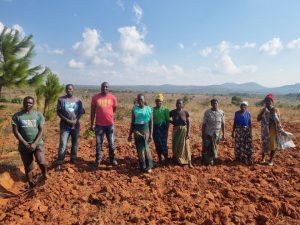
“Through this tour, it has become clear that we are sitting on wasted agricultural assets. Over the years, there have been significant investments in irrigation systems, but the lack of proper operations and maintenance has led to their deterioration,” Mr. Mould stated.
At the Subinja irrigation site, the team discovered severe vandalism, with key infrastructure, including pumps and electricity transformers, either stolen or damaged. Mr. Mould explained that restoring such infrastructure would require a thorough feasibility assessment and coordinated efforts between the Ghana Irrigation Development Authority (GIDA) and the Ministry of Food and Agriculture.
“We need GIDA to conduct a comprehensive feasibility study to determine how to restore the pumps, the dam, the fields, and the irrigation canals. Restoring the electricity and rehabilitating the pump house are also crucial steps in getting this facility back to full capacity,” he added.
One of the most concerning observations was the untapped irrigation potential in rice-growing regions, specifically in the Tano North and South Municipal Districts. The MiDA team found that a rice irrigation scheme, which has the potential to cultivate up to 1,000 acres, is currently only utilizing around 300 acres.
“An irrigation dam built in 2008 was never fully completed, which has limited its effectiveness,” Mr. Mould pointed out. “If the dam infrastructure and canal distribution system were completed, we could increase production from 1,000 tonnes of rice per year to between 6,000 and 7,000 tonnes annually. This would allow for two crops per year instead of one.”
Mr. Mould referred to such sites as “brownfield opportunities”—projects with existing infrastructure that could be revitalized through targeted engineering and water management investments, potentially leading to rapid expansion of farming activities.
He also highlighted the potential for boosting agribusiness development in these areas. By scaling up production, such projects could support the establishment of agro-processing facilities, such as rice mills, reducing Ghana’s reliance on imported rice and other food commodities.
The MiDA CEO’s call for action underscores the urgent need for a more coordinated and sustainable approach to managing Ghana’s agricultural assets in order to unlock the full potential of the country’s farming sectors.
Story:Efua Nessa
Source: Locotvgh.com