|
Getting your Trinity Audio player ready...
|
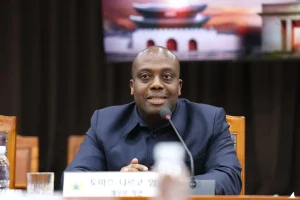
Deputy Minister for Finance, Thomas Nyarko Ampem, has announced that Ghana’s tax-to-GDP ratio has improved from about 12.3% to approximately 14% in 2025, describing it as a positive sign of progress in the country’s domestic revenue mobilisation efforts and broader fiscal reforms.
He made the remarks during the opening session of the Korea High-Level Invitational Visit by a Ghanaian delegation under the Ghana Tax Modernisation Project (2023–2026) in the Republic of Korea.
According to him, the improvement reflects the impact of ongoing reforms in tax administration and public financial management, which are aimed at strengthening revenue generation and supporting macroeconomic stability following the completion of Ghana’s IMF-supported programme.
Mr. Ampem noted, however, that despite the gains, Ghana’s tax-to-GDP ratio remains below the average for countries at similar levels of development, indicating the need for further reforms.
He emphasized the importance of expanding the tax base, improving efficiency, reducing revenue leakages, and enhancing voluntary compliance to sustain the progress made so far.
The Deputy Minister highlighted modern and integrated revenue systems, stronger institutional capacity, inter-agency collaboration, and the use of technology as key drivers for improving tax collection.
He further explained that the Ghana Tax Modernisation Project, supported by the Korea International Cooperation Agency and the Korea Institute of Public Finance, is central to the government’s strategy to transform tax administration.
The initiative is expected to produce a comprehensive Tax Modernisation Master Plan to guide future reforms and build a more efficient, transparent, and citizen-focused revenue system.
Mr. Ampem also expressed appreciation to the government of Korea and development partners for their continued support, saying the partnership would help Ghana strengthen fiscal sustainability and consolidate recent economic gains.
He expressed optimism that insights from Korea’s development experience would contribute to building a more resilient tax system capable of supporting Ghana’s long-term development goals.
Story by Efua Nessa