|
Getting your Trinity Audio player ready...
|
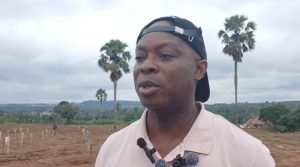
Ghana’s Forestry Commission, in partnership with Tullow Oil, has intensified efforts to address climate change and its impacts by embarking on a plantation development project in the Bono and Bono East regions. The project aims to restore degraded forest reserves and boost soil fertility. According to the Chief Executive Officer of the Forestry Commission, Dr. Hugh C. A Brown, the project has gained remarkable success since its implementation last year.
Human activities such as the release of greenhouse gases like carbon dioxide and methane, cutting down forests, and industrial operations trap heat in the atmosphere and raise global temperatures. Recent climate records show that global land temperatures have risen by roughly 2.03°C and ocean surface temperatures by about 1.03°C compared to pre-industrial averages, driven by a persistent Earth energy imbalance and rising greenhouse gas levels.
As part of efforts to address the global crises, Ghana’s Forestry Commission, in partnership with Tullo, a multinational oil and gas exploration and production company, has embarked on a plantation development project to restore degraded forest reserves in Bono and Bono East Regions towards achieving the global climate target of net-zero carbon emissions by 2050. The project, which commenced last year in the Bono East region, saw the distribution of seedlings to farmers.
Speaking after a courtesy visit to the Regional Minister, Francis Owusu Antwi, the Chief Executive Officer of the Forestry Commission, Dr. Hugh C. A Brown says the project has gained remarkable success. He explained that many lands are degraded because the farmers have no choice; however, as part of the project alternative livelihoods will be provided to take pressure off the Forestry Commission reserves and help the restoration processes.
Dr Brown revealed that despite their efforts, challenges such as cattle grazing and bushfires, which cause destruction to soil fertility, food crops and trees, remain an obstacle for the project’s success. He called on the regional minister, communities, and farmers to work together to address these obstacles.
Regional Minister Francis Owusu Antwi acknowledged that bushfires are one major challenge in the region; however, he believes that the project will reduce the practice. The minister urged farmers to take full responsibility for the seedlings distributed and ensure their maturity to enable the project to achieve its intended purpose.
The commission’s objective is not only plantation development but also addressing the concerns of farmers involved to ensure the project’s success.
Story By Efua Nessa