|
Getting your Trinity Audio player ready...
|
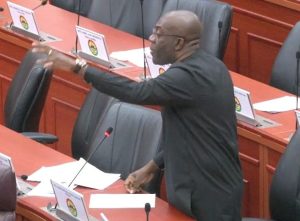
The Minority in Parliament has criticised the government’s decision to secure a $300 million World Bank loan to finance the Secondary Education Transformation for Access, Relevance and Results for Jobs (STARR-J) Project.
The caucus argues that the move reflects poor financial management, particularly coming just nine months after Ghana exited the International Monetary Fund (IMF) programme.
Speaking during parliamentary debate on the approval of the loan facility on Tuesday, July 21, Deputy Ranking Member on the Finance Committee, Dr. Gideon Boako, accused the government of turning to borrowing due to weak revenue mobilisation.
He said the country’s revenue performance had fallen short of expectations, making it difficult for government to finance critical projects without relying on the debt market.
“We just exited the IMF programme and for less than a year, we have begun to see government resort to the debt market to finance critical investment in this country,” Dr. Boako stated.
He added that the situation was a result of what he described as inadequate efforts by the Finance Ministry and economic managers to improve domestic revenue generation.
Meanwhile, Ranking Member on the Economy and Development Committee, Kojo Oppong Nkrumah, also raised concerns over what he termed increasing quasi-fiscal activities among state-owned enterprises.
According to him, such expenditures are putting pressure on government finances and affecting its ability to meet key obligations.
“At the central treasury, they can’t find resources to pay for some of these priorities and they have gone back to the debt market,” he said.
Parliament, however, approved the $300 million IDA credit facility from the World Bank to support improvements in secondary education across the country.
The project is expected to help end the double-track system under the Free SHS programme, construct 10 new secondary schools, upgrade 37 Senior High Technical Schools, improve infrastructure, and expand equitable access to quality education.
The credit facility agreement is between the Government of Ghana, represented by the Ministry of Finance, and the International Development Association (IDA) of the World Bank Group.
Story by Efua Nessa