|
Getting your Trinity Audio player ready...
|
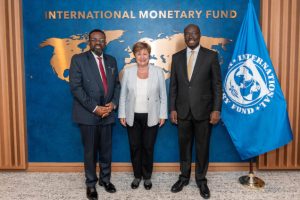
Ghana has formally exited the International Monetary Fund’s (IMF) Extended Credit Facility (ECF), concluding its sixth and final review under the $3 billion programme and transitioning to a non-financing Policy Coordination Instrument (PCI). The move marks the country’s 17th IMF programme, which Finance Minister Dr. Cassiel Ato Forson says will be the last, though history has shown similar pledges have often been broken.
On 6 January 2026, President John Dramani Mahama assured Ghanaians at the 77th Annual New Year School that this bailout would be the final one. He committed to maintaining fiscal discipline through to the 2028 elections and indicated that future engagement with the IMF would focus on technical collaboration rather than financial rescue.
However, Ghanaians are familiar with such promises. In 2014, Mahama initially denied plans for an IMF programme, only to sign the 16th bailout less than a year later. Similarly, former President Nana Akufo-Addo, despite championing the “Ghana Beyond Aid” agenda in 2018, returned Ghana to the IMF in 2022 for its 17th programme. Each broken pledge was framed as a response to external shocks—falling commodity prices, energy crises, the COVID-19 pandemic, and the Russia-Ukraine conflict.
Dr. Forson emphasized that the government currently has no plans to seek a fresh IMF bailout or issue new Eurobonds, though a medium-term return to international capital markets remains possible. The domestic bond market, however, has reopened successfully; in April 2026, the government raised ₵2.7 billion through a seven-year bond, oversubscribed with bids totaling ₵3.1 billion, signaling renewed investor confidence.
The transition to the PCI, a non-financing surveillance arrangement, along with the establishment of an Independent Fiscal Council, aims to replace external conditionality with domestic oversight. Analysts see the PCI as a test of Ghana’s fiscal discipline, giving creditors and ratings agencies a measure of confidence without IMF lending.
While the government frames the PCI as the start of a post-bailout era, history and structural challenges—such as election-year spending spikes, central bank financing of deficits, and commodity price exposure—mean that future financing decisions will remain under close scrutiny. The coming 2028 budget cycle will be the first sustained test of Ghana’s ability to maintain fiscal discipline without a bailout.
Story by Efua Nessa
Source: Loco tv