|
Getting your Trinity Audio player ready...
|
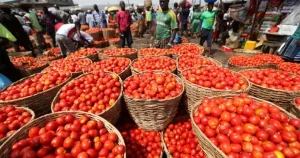
The Executive Director of the Peasant Farmers Association, Bismark Nortey, has warned that Ghanaian consumers will face significant challenges in the coming months due to a ban on tomato exports from Burkina Faso. He emphasized that Ghana’s long-standing failure to plan for food security is exacerbating the situation.
Speaking on JoyNews Desk on March 23, Nortey highlighted that the country’s lack of preparedness is leaving consumers vulnerable to rising food prices. “When we fail to plan and anticipate, situations like this hit us hard,” he said, pointing out that the government’s reactions show the gravity of the situation.
While acknowledging the Ministry’s efforts to engage Burkina Faso’s authorities, Nortey cautioned that the outlook remains grim. He emphasized that if the ban holds for the next one to four months, Ghanaians will feel the full impact, particularly given Ghana’s heavy reliance on Burkina Faso for tomato imports. Currently, over 90% of the tomatoes consumed in Ghana are sourced from Burkina Faso.
“The loss of such a large supply will create intense competition for the limited local produce, driving prices up significantly,” he explained. Nortey expressed frustration over Ghana’s repeated failure to take proactive measures despite similar disruptions in the past, notably between 2018 and 2019.
He revealed that proposals had been submitted to the government to boost local tomato production through farmer support, improved infrastructure, and systems aimed at achieving self-sufficiency. However, he criticized policymakers for prioritizing rhetoric over action. “Unfortunately, our policymakers seem more focused on speeches than on tangible solutions,” he said.
Nortey urged the government to ensure that its current promises are translated into concrete strategies that will prevent such crises in the future. He stressed that the situation serves as both a wake-up call to invest in agriculture and a reminder of the urgent need for intervention to stabilize the market in the short term.
“This is a serious wake-up call,” Nortey concluded. “If we don’t take agriculture seriously, we will continue to face such shocks. In the meantime, we are in serious trouble.”
Story:Efua Nessa
Source:Loco tv