|
Getting your Trinity Audio player ready...
|
“Senya Breku Residents Sound Alarm Over Deteriorating Fort Good Hope”
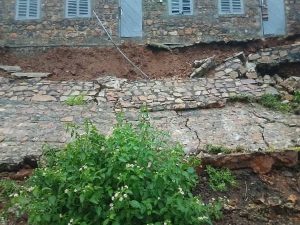
SENYA BREKU — Residents of Senya Breku are increasingly concerned about the deteriorating condition of Fort Good Hope, a historic landmark whose continued existence is threatened by structural damage and years of apparent neglect.
Ghana’s historic forts and castles remain important symbols of the nation’s cultural identity and historical experience, particularly its connection to the transatlantic slave trade. These monuments serve as significant heritage sites, attracting tourists, historians, and researchers from around the world.
However, the deteriorating state of some of these historic structures raises serious questions about the country’s commitment to preserving its cultural heritage for future generations.
Located along the coastline of Senya Breku in the Senya Breku District, Fort Good Hope is one such historic monument now facing an uncertain future. The facility, which once served as a significant heritage landmark before being converted into a guesthouse, is reportedly in a deplorable condition, with visible structural damage raising fears of imminent collapse.
The condition of Fort Good Hope has become a growing source of concern among residents, particularly following the collapse of a major section at the rear of the building in June 2026.
Months after the incident, concerns persist over the lack of substantial restoration work to address the damage and prevent further deterioration.
For residents, the situation represents more than the decline of an old building. It poses a worrying threat to an important part of Ghana’s historical heritage—one that could eventually be lost if urgent steps are not taken.
The people of Senya Breku fear that continued inaction could result in further structural damage, potentially leading to the complete collapse of the facility.
The fort’s deteriorating condition has generated growing frustration among sections of the Senya Breku community, with residents increasingly demanding urgent intervention from the authorities responsible for managing and preserving the country’s historic monuments.
Months ago, some aggrieved residents staged a demonstration to express their dissatisfaction with the state of the facility and to demand a change in its management approach.
Some community members have also expressed their willingness to take an active role in ensuring that the facility is properly managed and restored.
Residents believe that Fort Good Hope has enormous potential to become an attractive tourism destination capable of generating economic opportunities, creating employment, and promoting the development of the local community.
They argue that allowing such an important historical asset to deteriorate is not only a loss to Senya Breku but also a setback to Ghana’s broader heritage preservation efforts.
There may be renewed hope for the future of Fort Good Hope following the announcement, during the presentation of the 2027 fiscal year budget, of a financial allocation toward the rehabilitation and preservation of Ghana’s historic forts and castles.
The announcement has raised expectations among residents and heritage advocates, who are calling for Fort Good Hope to be given priority consideration under the proposed restoration programme.
For the Senya Breku community, this presents an important opportunity for the government to demonstrate its commitment to protecting the country’s historical monuments.
Residents are therefore appealing to the relevant authorities to ensure that the facility is not overlooked in the restoration plans, considering its deteriorating condition and the urgent need to prevent further damage.
The situation at Fort Good Hope calls for immediate attention from the Ghana Museums and Monuments Board (GMMB), the Ministry responsible for tourism, and other relevant government agencies.
Residents are urging the authorities to undertake an urgent structural assessment of the facility and to initiate the necessary emergency and restoration measures before the damage becomes irreversible.
Beyond its historical significance, the preservation of Fort Good Hope could contribute meaningfully to tourism development, community economic growth, and the promotion of Ghana’s cultural identity.
The people of Senya Breku are not merely calling for the rehabilitation of an old structure; they are calling for the protection of a historical legacy that belongs to present and future generations.
Fort Good Hope must not become another lost chapter in Ghana’s history. Its preservation requires urgent attention, collective responsibility, and decisive action from the authorities.
The question is no longer whether the fort deserves restoration, but whether the necessary action will be taken before it is too late.
source: DC Kwame Kwakye