|
Getting your Trinity Audio player ready...
|
𝗕𝗥𝗘𝗔𝗞𝗜𝗡𝗚: Donald Trump Just Put His Signature on U.S. Money.
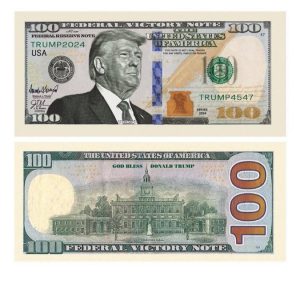
Donald Trump’s signature will appear on United States paper currency for the first time in history, following an official announcement by the United States Department of the Treasury.
The move marks a historic departure from a 165-year tradition in which U.S. banknotes have carried the signatures of the Treasury Secretary and the Treasurer of the United States. Under the new policy, the Treasurer’s signature will be removed and replaced with that of the sitting president, beginning with newly printed $100 bills.
According to Treasury officials, the redesigned notes will begin production in June 2026 and are expected to enter circulation later in the year. The new bills will feature Trump’s signature alongside that of Treasury Secretary Scott Bessent, while the overall design and security features of the currency will remain largely unchanged.
The policy shift is part of broader commemorative plans marking the 250th anniversary of U.S. independence in 2026. Officials describe the change as symbolic, intended to reflect national achievements and economic progress during Trump’s presidency.
Historically, U.S. law and convention have avoided placing sitting presidents on active currency, with signatures traditionally limited to Treasury officials. The removal of the Treasurer’s signature mandatory on U.S. banknotes since the 19th century represents a significant institutional change.
The decision has sparked mixed reactions. Supporters view it as a historic recognition tied to the nation’s milestone anniversary, while critics argue it risks politicizing national symbols and breaking long-standing norms surrounding U.S. currency design.
Despite the change, existing U.S. dollar bills will remain legal tender and continue circulating alongside the new series once released.
This development marks the first time a sitting U.S. president’s signature will appear on American paper money, signaling a notable shift in both tradition and policy within the country’s financial system.
Adjei Samuel Oko